Introduction
Given the amount of words that have been written about the modern Olympic Games since their first staging in 1896, it may seem odd to think that there are hidden aspects of the history. But there are many aspects that have not been explored by researchers. In spite of the huge holdings in the archives of the
International Olympic Committee in Lausanne,
the British Olympic Association in London, and other national governing bodies, plus the extensive collections of the many international sporting federations, oral histories are relatively rare.
The British Library has a few of these in their collections, as does the
National Paralympic Heritage Trust. However, compared with the number of athletes who have represented Team GB alone, there is a real need to collect oral histories to bring the experience of being an Olympian to life.
Why use Oral History to study Olympic and Paralympic History?
Most Olympians and Paralympians do not win medals. This is an obvious, but often overlooked point. For most competitors, who are now more likely to be professional athletes, than amateurs, they will enjoy taking part rather than standing on the winner’s rostrum. The often statistically heavy bias to Olympic history often ignores the more dramatic stories of who was included and who was not. Given that there has traditionally been a male tradition in Olympic and Paralympic leadership, there are also reasons why women’s stories, and those of girls, are excluded.
Individual versus Structural Stories
As an example, the second London Olympic Games in 1948 looked selectively backwards and forwards: absent from the Games was Mrs Winifred Pritchard, who had won four races in the Royal Yacht Association trials but was prevented by IOC rules from representing her country as late as May 1948. In spite of women previously competing on water, she was informed that mixed sailing events would be 'introduced' in 1952. Beryl Preston (1901) had been the most recent female competitor at the 1936 Berlin Games but Britain would not have a female yachting representative again until 1960 when Jean Mitchell (1901) took part in the Star class.
Similarly, when kayaking was introduced in 1948, canoeing or any event over 500 metres was considered too strenuous for women. Britain nevertheless has an unbroken record of female competitors with Joyce Richards; Shirley Ascot (1930); Patricia Moody (1914) and Marian Tucker (1937) representing their country between 1948 and 1964.
So, by 1948, only five sports were open to women competitors. They made up just 400 of the 4100 competitors in London. Track and field athletics, gymnastics, fencing and canoeing were minority interests and only swimming a genuinely popular recreational activity. The disciplines within those sports were also limited and somewhat arbitrary. So it could be said that the wider cultural practices (or how most people did sport), were not to be understood by the very nature of their staging in an Olympic or Paralympic tournament, as the Stoke Mandeville Games would later become.
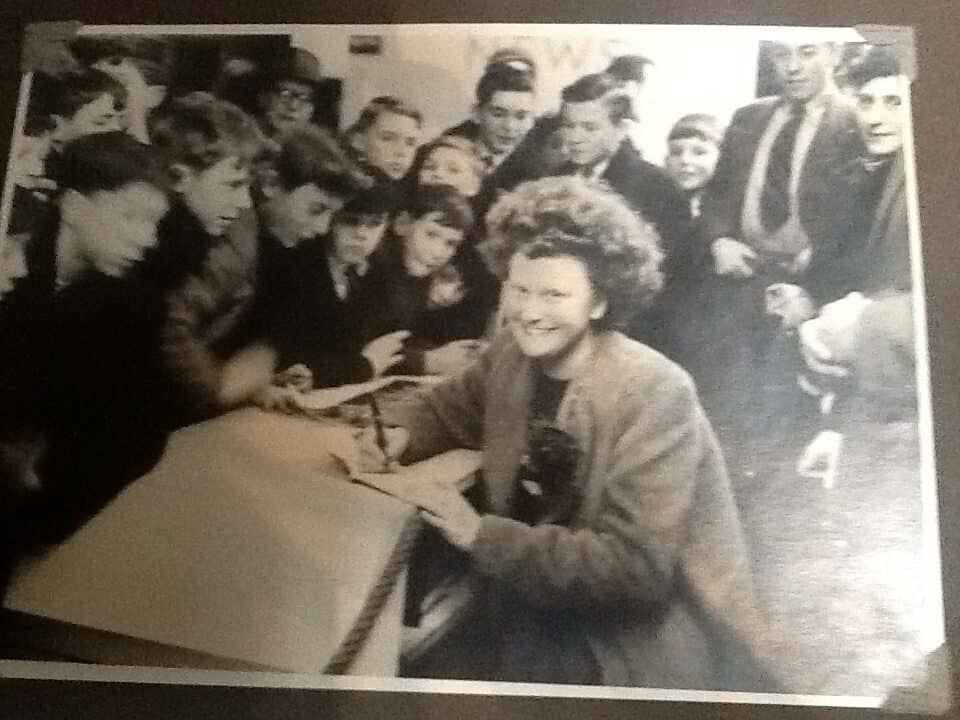
Case Study: Margaret Wellington, The Mermaid in the City
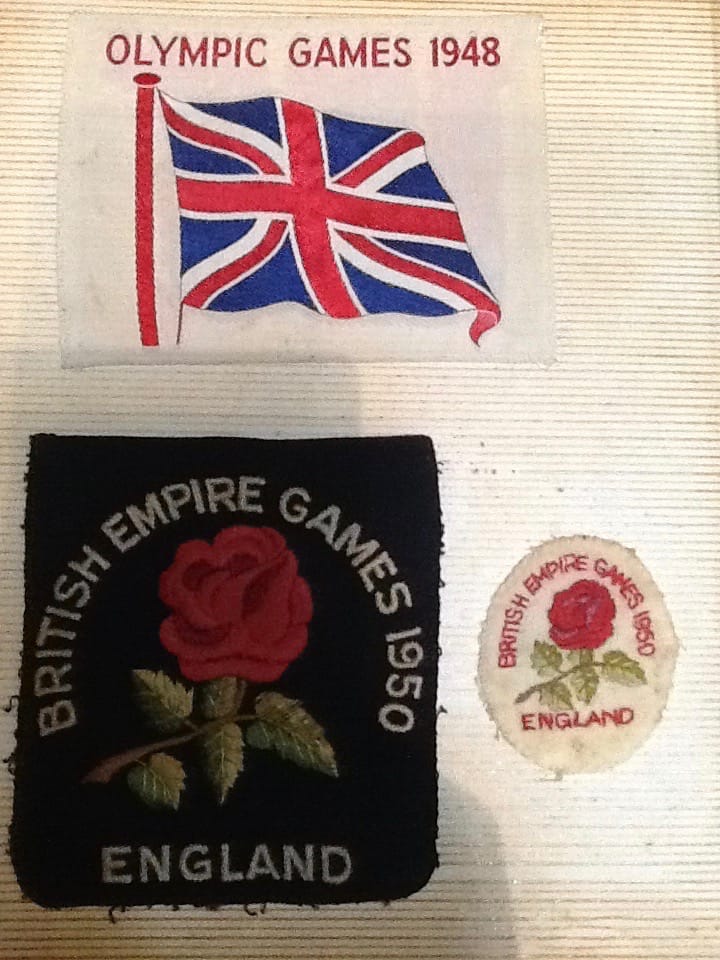
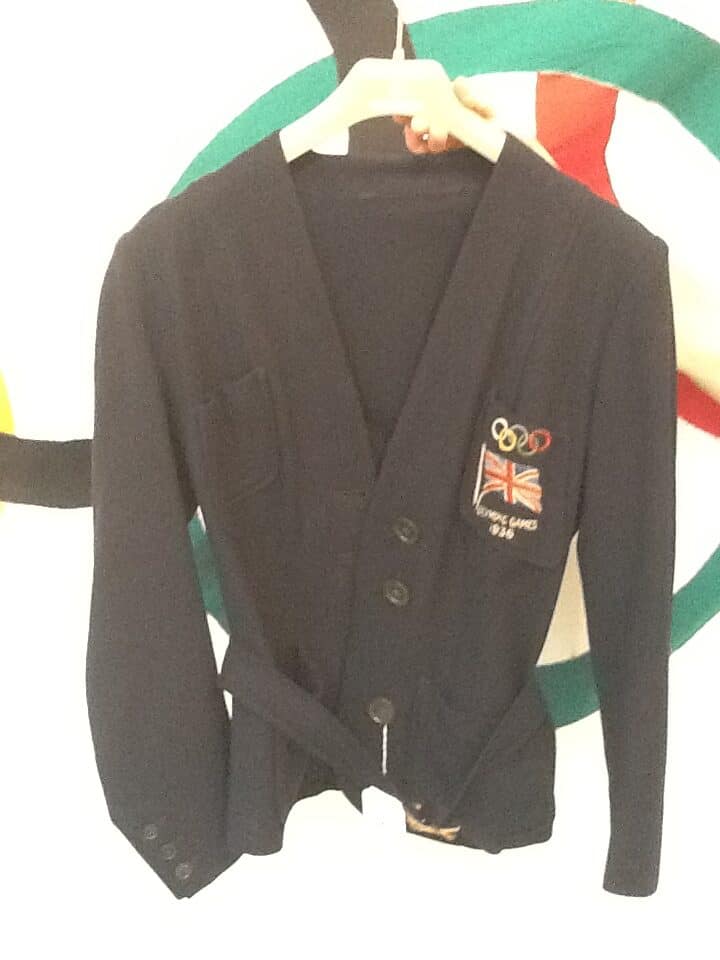
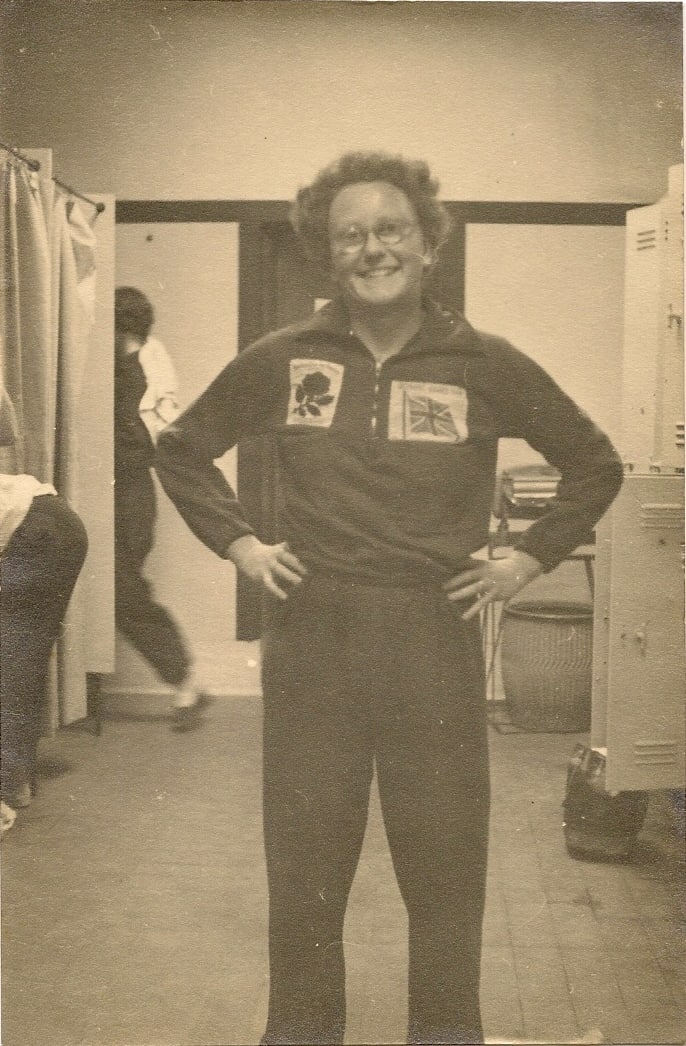
Margaret Wellington was part of the team that finished fourth in the 4 x 100 metres swimming freestyle event at the 1948 Summer Olympics with colleagues Cathie Gibson, Patricia Neilson (1930) and Lilian Preece.
Margaret Wellington (born in 1926) of Beckenham Ladies' Swimming Club, in South London. Wellington declared that she had little natural talent and her weekly visits with the Alexandra Junior School to the local pool were enough to make most coaches weep: 'If there is one thing I have proved in my life as a sportswoman, it is that a national swimming champion can be fashioned out of the most hopeless-looking material.'
She wrote an article, 'Swimming to be a Champion-7 Days a Week' in Carolyn Dingle (ed.) News Chronicle: Sport For Girls (London: News Chronicle Publications Department, 1951) claiming that she did not take swimming seriously enough to increase her training visits from one to seven days a week until she was fifteen and a half. This had a dramatic effect, as she would finish second in the national 100 yards freestyle final in 1946. She then came a close third at the 1947 national finals and reached Pathé's attention as the '
Mermaid in the City', because she worked at a bank and trained nearby.
Wellington married Basil Restorick, in 1951 and wrote of the opportunities for travel provided by swimming. These included travelling to the Empire Games in New Zealand in 1950 by boat. A return air trip for the Christchurch Centenary Celebration Games in 1951 took in Rome, Cairo, Karachi, Calcutta, Singapore, Darwin, Fiji, Hawaii, San Francisco, Hollywood and New York. Including five weeks in New Zealand, this trip took two months, enabling Wellington to meet Test cricketers including Denis Compton, in addition to film stars Jane Powell and Dorothy Lamour. I spoke to Margaret’s daughter, Leslie, about this impressive career.
Conclusion
Although a relatively minor figure in Britain's Olympic tradition, Wellington's brief moment of fame shows that amateurism could clearly have its benefits. The only other female swimmer on the trip was national backstroke champion in 1938, Helen Yate (1921), who had been able to continue to train during the war in her home-town of Plymouth due to a Women’s Royal Navy Service posting there. Yate also benefitted from being de-mobbed to concentrate on her athletic career but, ultimately, finished out of the individual Olympic medals in 1948 to Denmark's Karen Harup (1924-2009), Suzanne Zimmerman (1925) of the United States and Australia's Judith Davies (1928). Wellington swam to a good age, and appeared with friends in an advertisement for Evian mineral water in a sparkly red swimsuit. Yate also corresponded with me in her later years for my book and you can read more about their story
here.
If you have any material relating to Olympic history, particularly careers of women athletes, please get in touch.